Yuma Samyo is not just a religion.
It is a way of life.
A complete spiritual and cultural system passed down from the ancestors of the Yakthung people, also known as the Limbu.
Rooted in tradition, guided by Mundhum, and centred around Yumamang, it is deeply tied to the identity, rituals and worldview of the Yakthung community.
Let’s look into the meaning, philosophy, and practices that make Yuma Samyo one of the most unique indigenous belief systems in Nepal.
What is Yuma Samyo?The word Samyo in the Yakthung tradition refers to the collective body of rituals, customs and practices that guide life from before birth to after death.
It is not based on scriptures in the same way as other world religions.
Instead, it is oral, spiritual, and deeply rooted in daily life.
It is guided by the Yakthung Mundhum, the ancient oral texts that serve as the religious and philosophical foundation of Yakthung culture.
Yuma Samyo vs Other ReligionsIn Western traditions, religion often focuses on salvation, renunciation, or liberation.
In Hinduism and Buddhism, ethics and teachings passed down by sages or enlightened beings guide the path.
But Yuma Samyo is different.
It is:
Indigenous
Community based
Centred around ancestral rituals
Intertwined with the environment and nature
Practiced through rites, not scripture
For the Yakthung people, their religion is lived, not just believed.
The Core of Yuma Samyo: Rituals and CeremoniesRituals in Yuma Samyo are not optional.
They are an essential part of honouring life, family, and the spirits.
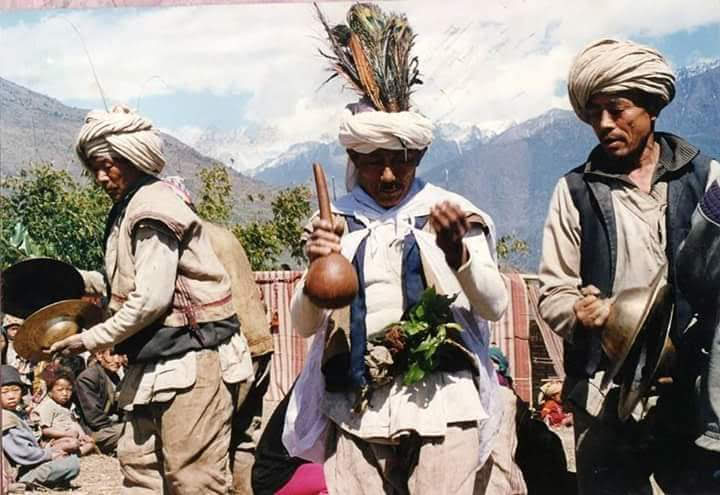
These are conducted by spiritual leaders such as:
Tumyahang
Phedangma
Samba
Yeba and Yema
Yumathukpa
These figures are known as the callers of Yumamang, the principal deity.
They perform ceremonies across all life stages:
Birth Rituals
Sappok Chomen
Yangdang Phongma
Manggena
Phungwa Changma
Marriage Rituals
Tendham Mekhim for sons
Ingme and Mellung Phuma for daughters
Death Rituals
Yumsa
Samsama
Kushiringba ritual purification
Samdakhung
Khauma
Mui Semma Si Tansing
Each stage of life is deeply respected and marked with proper rites.
No shortcut. No skipping.
Every religion has a worldview.
In Yuma philosophy, everything in the universe is:
Constantly changing, known as Muboklungma
Impermanent, known as Kheboklungma
Life is seen as part of a greater cycle, connected to the spiritual and natural worlds.
Who is Tagera Ningwaphumang?Tagera Ningwaphumang is the Supreme Being in Yakthung belief.
Described as:
Formless
Omnipresent
Omniscient
Creator of all things
Tagera Ningwaphumang is not worshipped as a distant god, but as the source of all life, guiding everything that exists, including humans, animals, plants, and spirits.
Yumamang: The Mother DeityIf Tagera Ningwaphumang is the Supreme Power, Yumamang is the Mother of the Universe.
The Yakthung people worship Yumamang with deep respect and affection.
She is believed to:
Protect the sky and earth
Look after all beings, living and non living
Help during disaster, illness, and spiritual crisis
Be the source of healing and strength
Yumamang is called upon in times of trouble, not just prayed to, but remembered and spoken to as a living presence.
The Role of Porokmi Yambhami MangIn Yakthung belief, the creator of the universe is Porokmi Yambhami Mang.
During the creation process, Porokmi Yambhami Mang consults with Tagera Ningwaphumang, also known as Yumamang, whenever challenges arise.
This shows the interconnectedness of divine forces, where balance, wisdom, and cooperation shape existence.
Nature, Ritual, and Identity in Yuma SamyoThe beauty of Yuma Samyo lies in how nature and spirituality are one.
The trees
The rivers
The mountains
Even the soil
They are not just part of the environment.
They are sacred and alive.
To be Yakthung is to live in balance with nature, ancestors, and spirit.
FAQs About Yuma SamyoWhat is Yuma Samyo?
Yuma Samyo is the indigenous religion of the Yakthung Limbu people, guided by the Mundhum and centred on ancestral rituals and the worship of Yumamang.
Is Yuma Samyo similar to Hinduism or Buddhism?
No. Yuma Samyo is distinct. It is not based on written scriptures but oral traditions. It focuses on ancestral rites, nature, and the spiritual world.
Who leads the rituals in Yuma Samyo?
Spiritual leaders like Tumyahang, Phedangma, Samba, Yeba, and Yema conduct the rituals.
Who is Yumamang?
Yumamang is the principal mother deity in Yakthung belief. She protects all life and is deeply respected in the community.
Is Yuma Samyo still practiced today?
Yes, it is actively practiced among Yakthung communities and passed down through generations.
Yuma Samyo is not just a religion.
It is memory.
It is connection.
It is life lived with meaning, guided by ancient wisdom.
In a world that moves fast, Yuma Samyo remains slow, grounded, and rooted in something real, ancestry, nature, and spirit.
To understand Yakthung ancestry is to understand Yuma Samyo.
And to follow Yuma Samyo is to honour every step your ancestors walked before you.