SERGEM - A Savoury Link to Limbu Heritage!
- Home
- Contributors
- SERGEM - A Savoury Link to Limbu Heritage!
- 15 Dec 2025
- Namoti Nembang
-
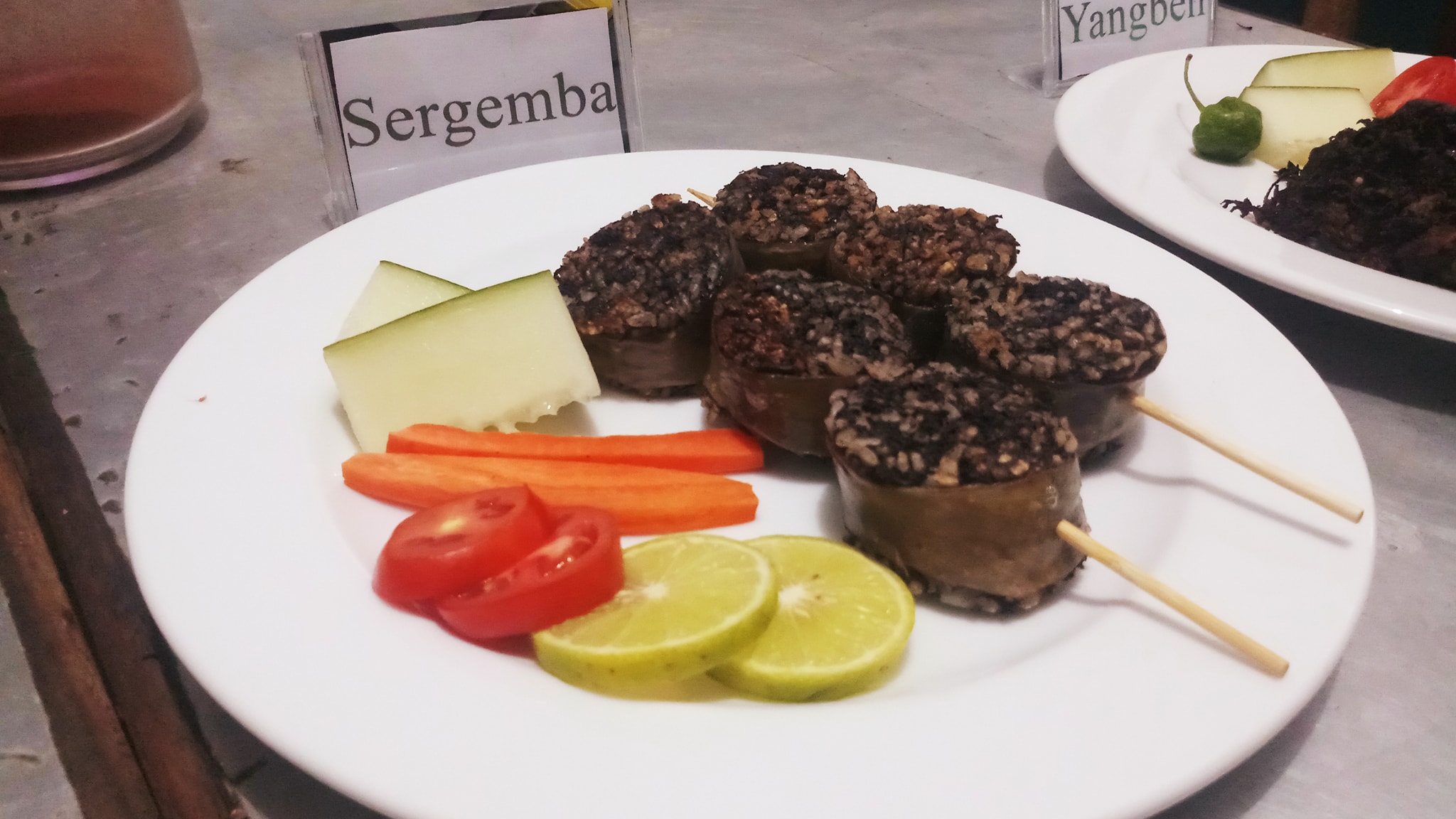
Sergem is a beloved Limbu delicacy, a traditional sausage made from pig’s blood, minced pork, wild lichen known as yangben, and plenty of salt and seasonings. It’s a bold and hearty dish that reflects the Limbu way of life.
Though sergem isn't exclusive to a specific occasion, it has traditionally been prepared during festivals such as Dashain, Tihar, Sisekpa Tongnam (Saune Sankranti), Kokphewa Tongnam (Maghe Sankranti), Chasok Tongnam (Mangshir Purnima), and Yokwa Tongnam (Baisakh Purnima). These celebrations hold immense cultural importance for the Limbu community.
The exact origins of sergem remain unclear, but it is believed that the dish began as a way to utilize parts of the pig when it was slaughtered for food or religious rituals.
Pigs and chickens are at the core of Limbu culture: they are not just for eating but are essential elements for religious ceremonies and family customs. They are indispensable in life events like weddings, ancestor worship (kul puja), and numerous rites of passage.
The Limbus follow an animist faith, believing everything—living or not—has a soul. So, when they hunt or slaughter an animal for food, they first offer its spirit to the gods. Rituals like kul puja—Nahangma, Thebasam, and Sakmura Wademma (a cleansing ceremony to expel curses or harmful words and restore family harmony)—often require the sacrifice of a pig. Typically, an uncastrated three-year-old male pig is chosen for such rituals. Unlike everyday meals, the pork for these rites is cooked without any seasoning or salt and consumed strictly within the family. Leftovers are not shared outside the home but are respectfully buried in a small pit dug in the kitchen.
When pigs are slaughtered during festivals or sacred rituals, there is often an excess of meat and blood. Sergem likely emerged as a practical solution to avoid waste. The sausages are rich in protein and are especially useful during strenuous workdays.
In Limbu homes, pork isn’t just food—it’s a celebration. They treat pork dishes seriously. While chicken and goat may be enjoyed, they can't rival the reverence for pork. If you’re invited to a Limbu family’s big feast (a fudong) or you’re a special guest, you can bet they’ll serve pork. It’s how they show respect.
Back in the day, before refrigerators were around, people stored sergem in woven bamboo baskets called perengo, hanging it on the wall to dry for at least a day before eating. The air-drying pulled out the moisture, and the sausages could last two weeks or more without spoiling. Salt and fat naturally preserved the meat.
These days, hardly anyone in the city makes sergem at home, since home slaughter is rare. Yet, one can still savor this dish at some restaurants, indigenous food festivals, and Limbu celebrations in areas like Hattiban.
Sergem isn’t just food—it’s a window into the culture, history, and warmth of the Limbu people. Whether at a rural home or a bustling celebration, this traditional sausage remains a treasured link to the community’s roots.