Yakthung Limbus are one of the autochthonous tribes with its own distinct culture, traditions, and religious belief. They are scattered throughout the different parts of the world such as Sikkim, West Bengal, Assam, Meghalaya, Manipur in India; Bhutan, Nepal, United Kingdom, Singapore, Japan, Korea, United States of America, Hong-Kong, Myanmar etc. Yakthung Limbus have a long tradition of narrating or reciting Mundhum (sacred oral narratives) and performing rituals and observing ceremonies in their own distinctive ways guided by the Mundhum.
Significance of the TUMYAHANGS?
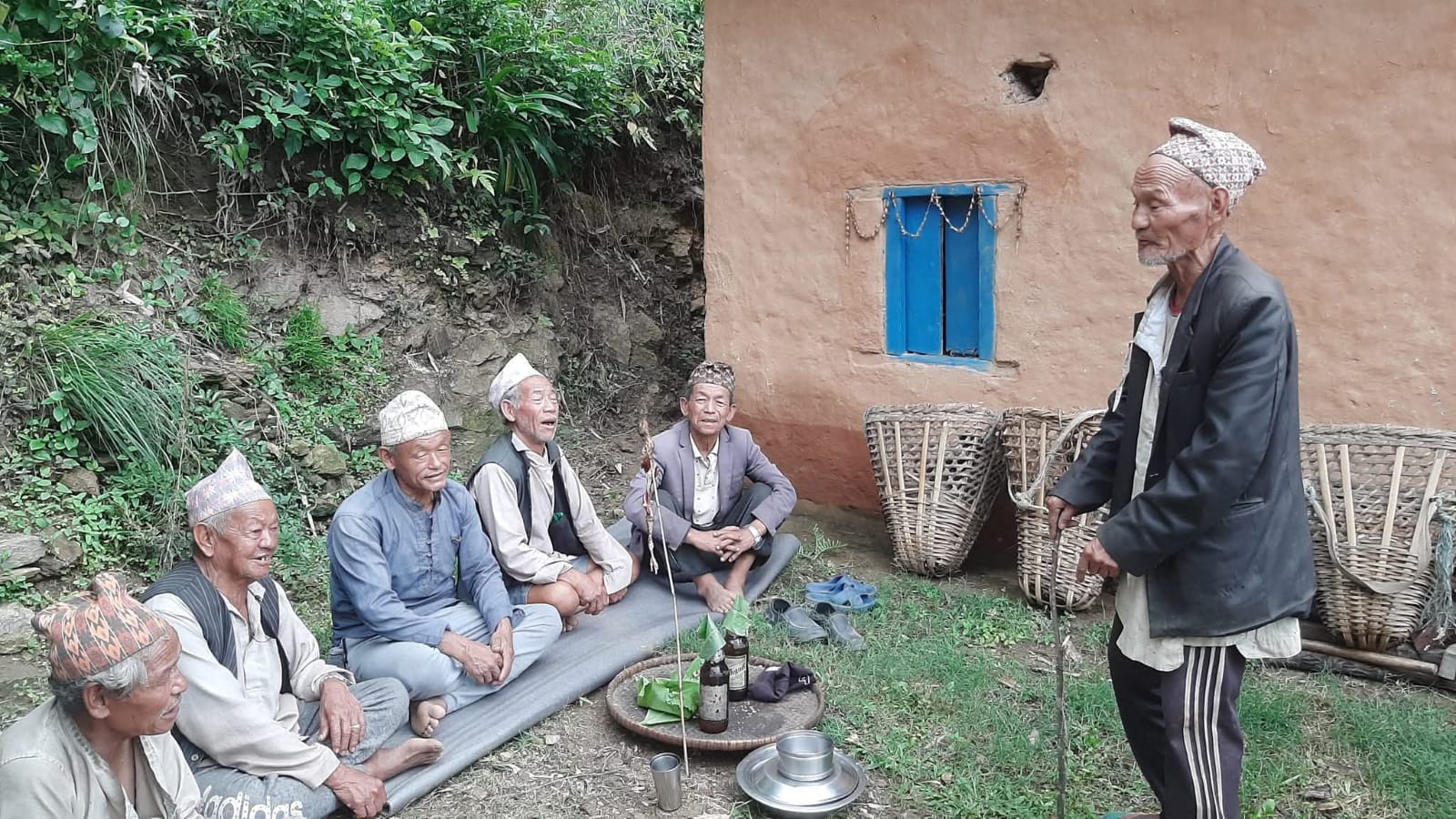
- They are the notable, wise men and resource person in the Yakthung Limbu community.
- They are the socio-religious body consisting of community elders. They are people who must be good at Mundhum and customary knowledge.
- As per the Mundhum, the Yakthung/ Limbu people used to sit for Chumlung/meeting to discuss on various issues and solutions to the problems. They followed the system of division of work. Later, they began to be called as the sons of soil, LUNGBONGNA KHAMBONGBA. In this way, the people, who bear responsibilities in the society are recognized as Tumyahang.
- They seem to have established as an institution within the community. They use to call for Chumlung/Sabha/ Council for the judicial works. Still Tumyahangs existed and are very much required in the Yakthung Limbu community to settle the disputes related to marriages, wedding ceremonies, death rituals, social problems, customary practices in the Yakthung Limbu community.
- They play an important role in the Yakthung Limbu death rituals during many rituals such as YUMSA (touching salt and oil), and KHA?UMA (death rituals).
- They play the judicial roles in disputes based on household shares, sharing land among siblings, land border disputes and determining areas of lands.
Few examples of rituals where their role is important:
- CHOKPHUNG: It is a process of adoption that involves a person from outside the community to include him/her in one’s lineage in the Yakthung/Limbu community.
- SHASING LAPMA: It is a process of adopting a child. Tumyahang has a great role in this ritual.
- KA?E SODHOK: It is an invalid marriage/wedding within siblings or relatives or family bloodlines. Such marriage/relationship is considered illegal or illicit in the Yakthung/Limbu community. Tumyahangs do hear such cases and decide the punishments for such act.
Tumyahangs have a very important role in wedding rituals. Limbu Shamans conduct LAGAN (wedding rites) under the presence of Tumyahangs during the wedding ceremonies in Yakthung/Limbu community. They are the ones who guide and cross check the work of Phedangma, Samba and Yebas in the community. These days we see diminishing role and respect given to the Tu Tu Tumyahangs. Tumyahang system is getting weak due to the less importance and encouragement given to this system. Yakthung Limbu ritual works remain incomplete in the absence of Tumyahang. They are responsible in the rites as well as the Judicial works in the community.
There are many incidents in Mundhum highlighting the role of Tumyahangs and the decisions taken coming from the almighty Tagera Ningwaphuma. Here are few examples given below:
1. Tumyahangs Punishing the evil Sun, LASHARA THENAMYAMBA, to provide the justice to the people.
2. Tumyahang played an important in the episode of straining the eighteen children in a sieve between Tetlara Lahadongna and Suham Pheba.
3. They are mentioned in the Pajoeba Mundhum during the Phungwachama ritual.
Today, Tumyahang system are diminishing and getting weaker hence they need more attention and importance. All Yakthung/Limbu scholars need to initiate more detailed study, learning and research on it. Restoration of Tumyahang system in Yakthung/Limbu community opens door and scope for further research and explorations on Limbu culture, ancient knowledge, customs, and Mundhum. Tumyahang system needs to be more organized, systematic, strong, and reinstated in every Yakthung/Limbu village. This may develop a consciousness and unity among the Yakthung/Limbus. It will help them to make their customs and rituals general despite geographical constraints which could be followed by all the Limbus worldwide. It is time to preserve, promote and develop Tumyahang system in the Yakthung/Limbu community. Despite knowing the importance yet we see less research and lack of interest in the Tumyahang system which is very disappointing and alarming for the coming generations.
Sources:
- Amrita Thebe, Tumyang Judiciary System in Limbu Community (A Customary Law).
- Bal Muringla, Limboo Marriage: The Primitive Way.
- Arjun Mabuhang, Limbu Jatiko Mundhum Ra Itihas.
- Chaitanya Subba, The culture and Religion of Limbus.